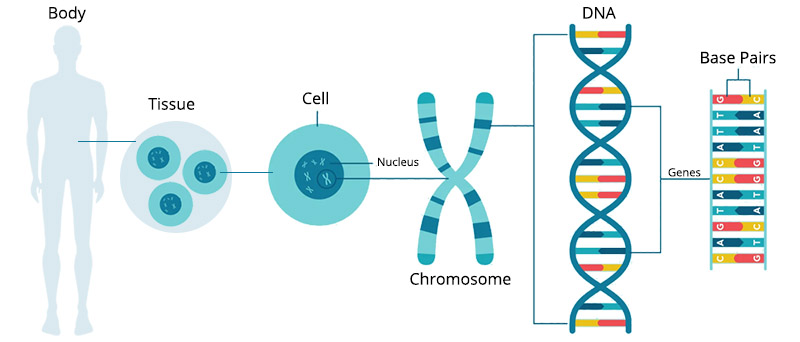
What are chromosomes?
Chromosomes are structures found inside of every cell, containing genetic information – our DNA. Genes, in turn, are DNA segments, which contain information about how a cell should work.
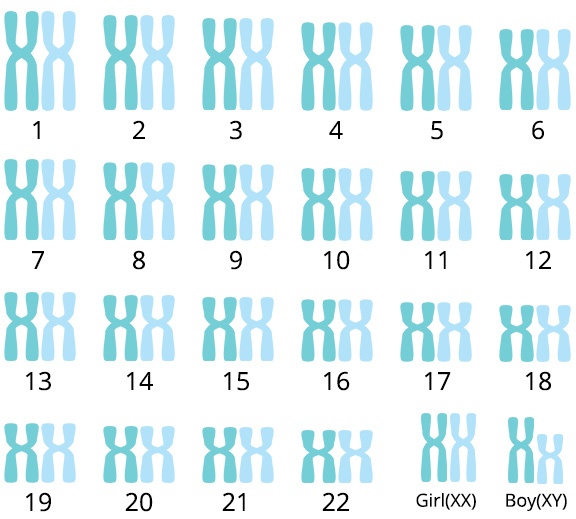
A human being has 23 chromosome pairs: 22 pairs of autosomes and one pair of sex chromosomes (XX in the case of women and XY in men).
What are chromosomal abnormalities?
When an egg gets fertilised by a sperm cell, each parent contributes with one chromosome from each pair, in accordance with the laws of heredity. However, sometimes undesired changes take place which results in a genetic alteration or abnormality. Therefore, even if both parents are normal, pregnancy or child can be abnormal (de-novo).
Various Types Of Chromosomal Abnormalities
1.
Numerical abnormality/Aneuploidy: Extra or missing chromosome
Some common diseases:
-
Down’s syndrome (Trisomy 21)
-
Turner’s syndrome ( 45X0)
-
Klinefelter syndrome ( 47 XXY )
-
Trisomy 18
-
Trisomy 13
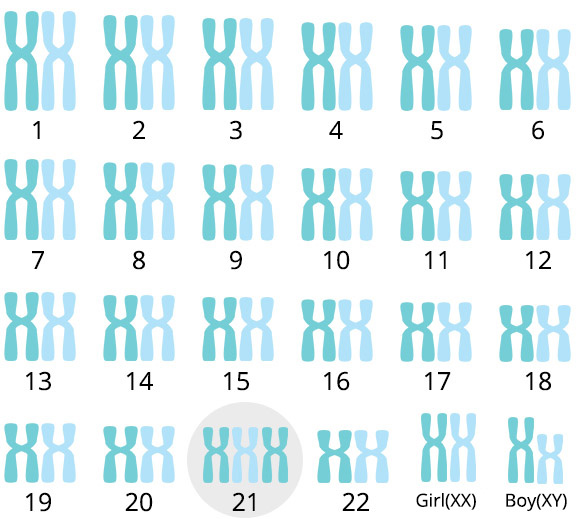
Pair number 21 contains three copies instead of two (Trisomy 21) indicating Down’s syndrome
2.
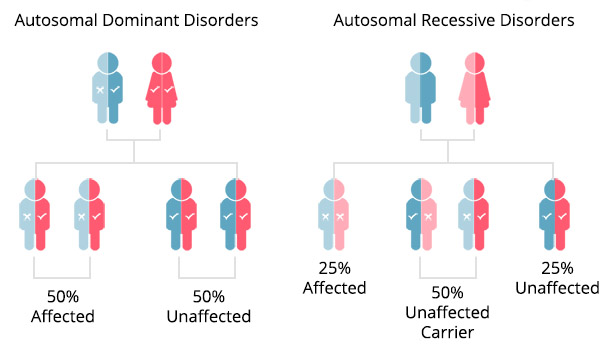
Monogenic disorder/Mendelian disorder: Alterations or Mutations of a single gene
Some common Autosomal recessive, Autosomal dominant and X-linked disorders, such as :
-
Beta Thalassemia
-
Cystic fibrosis
-
Huntington´s disease
-
Muscular dystrophy
-
Fragile X syndrome
-
Haemophilia A
-
Sickle cell anemia
-
BRCA 1 & BRCA 2 mutations
3.
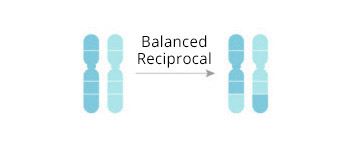
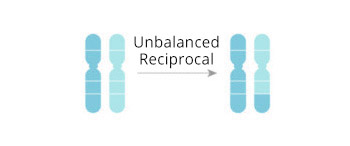
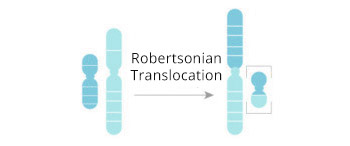
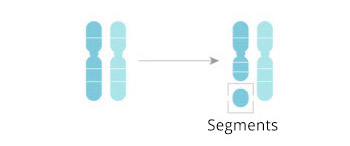
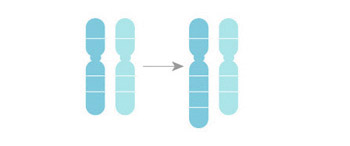
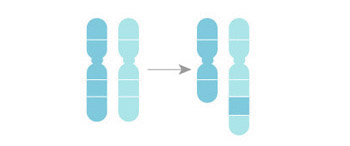
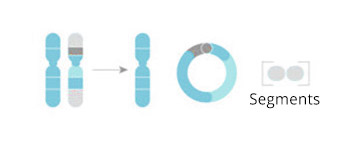
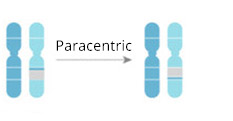
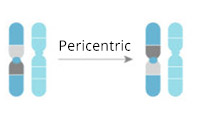
Structural: Chromosomes with abnormal structures due to the rupture or incorrect union of various segments, such as:
-
Translocations
-
Deletions
-
Duplications
-
Insertion
-
Rings
-
Inversions
What is PGT?
Your embryos can be tested for abnormal chromosomes before they are transferred to the uterus. This is called PGT, formerly known as PGD (Preimplantation Genetic Diagnosis).
Why do PGT?

First, to determine if embryos have genetic abnormalities that often cause failed implantation and miscarriage, resulting in unsuccessful IVF.

Second, to identify embryos with genetic defects that can lead to an abnormal pregnancy resulting in either abortion or a child with genetic disorders.
Embryos found to have such flaws are excluded from being transferred to the mother’s womb for pregnancy.
How is PGT performed on embryos during IVF?
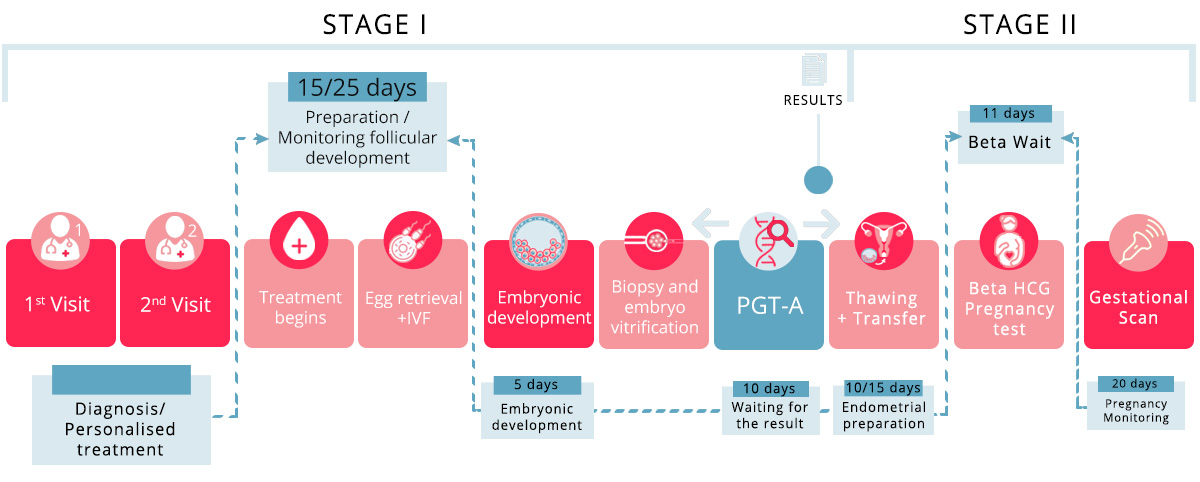
PGT is done in two steps. The first step is an embryo biopsy. The second step is an analysis of the biopsy by a laboratory to conduct genetic testing on DNA by newer techniques like Micro assay and Next Generation Sequencing (NGS).
Types of Pre Implantation Genetic Testing
1. PGT-A (Pre Implantation Genetic Testing for Aneuploidy)
Analysis of embryo cells to determine if there is a normal amount of chromosomes.
CANDIDATES FOR PGT-A:
-
Couples who have had a previous pregnancy with aneuploidy.
-
Women who have had two or more miscarriages.
-
Women who have experienced previously failed embryo implantation.
-
Women diagnosed with unexplained infertility.
-
Women that older than age 35.
-
Women who have undergone numerous unsuccessful fertility treatments.
-
Women who have low AMH (Anti Mullerian Hormone)
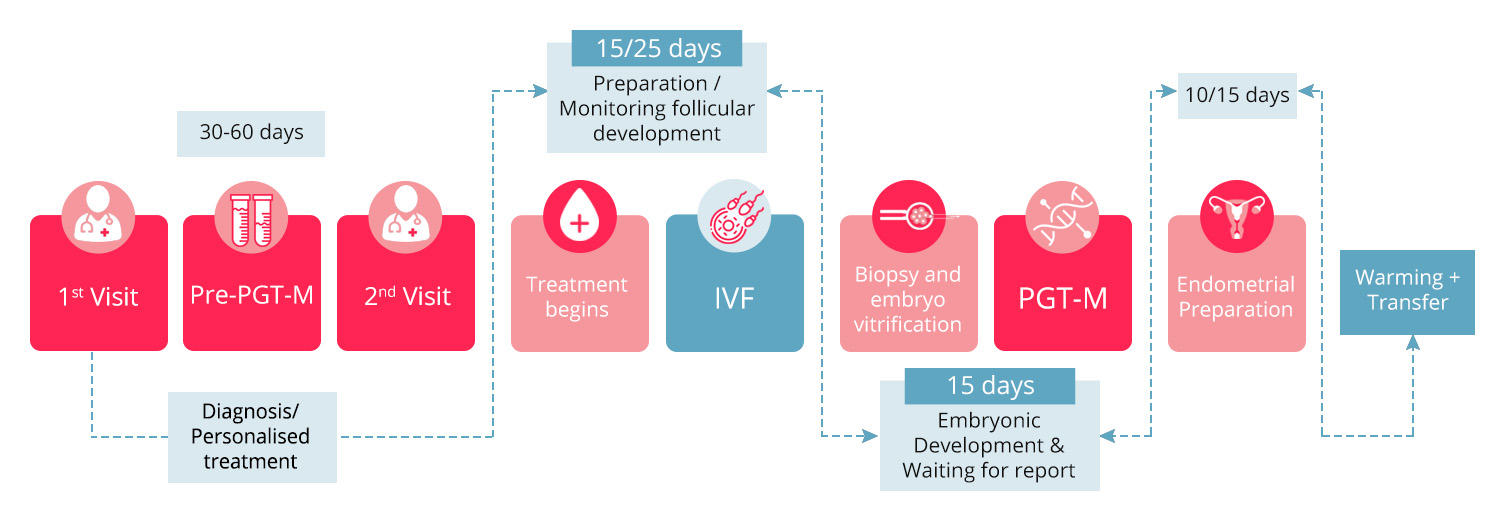
2. PGT-M (Pre Implantation Genetic Testing for Monogenic disease)
Analysis of specific/monogenic gene mutations that one (or both) of the parents is known to carry.
CANDIDATES FOR PGT-M:
-
One of the members of the couple diagnosed with a genetic disorder.
-
Couples in which both members are unaffected carriers of the same genetic condition.
-
Family history of a genetic disorder.
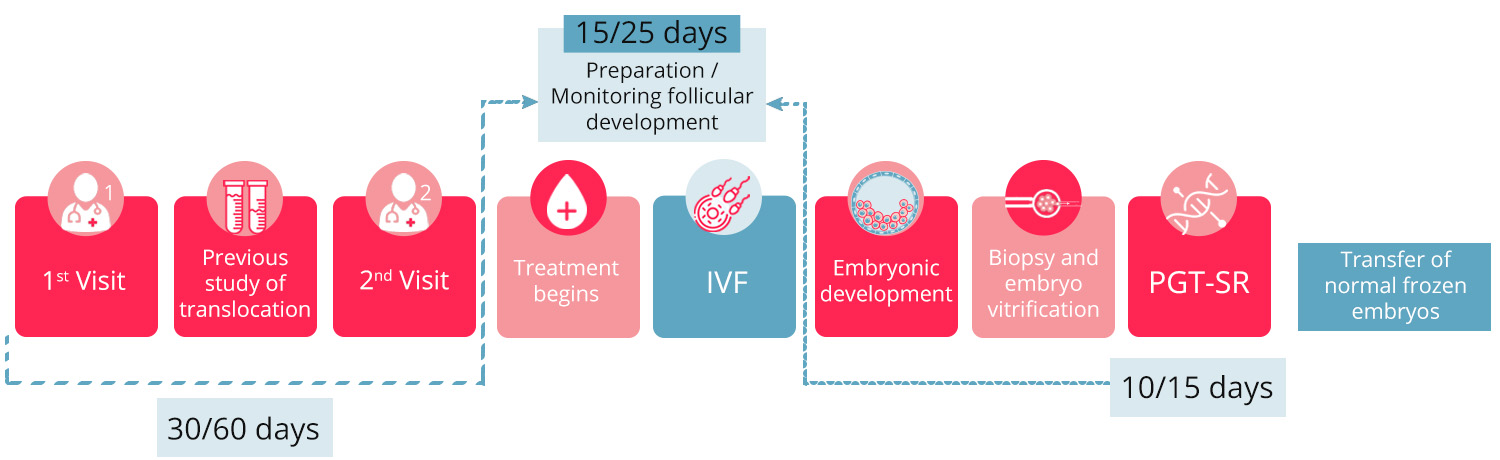
3. PGT-SR (Pre Implantation Genetic Testing for Structural Rearrangement)
Analysis of embryos of patients known to have a chromosomal structural rearrangement.
CANDIDATES FOR PGT-SR:
-
One of the members of the couple is a carrier of a chromosomal structural rearrangement.