What is Assisted Hatching?
It is an advanced technique carried on embryos before they are transferred in the uterus following an IVF or ICSI cycle. The process helps the embryo to come out by weakening the zona either by breaching it or making it thinner. The goal is to overcome all the odds that are preventing implantation or successful pregnancy.
For the first 5 to 7 days of development, the embryo is surrounded and protected by an outer shell called the zona pellucida. In normal circumstances, when the embryo reaches the uterus, this zona partially dissolves and the embryo comes out of it (hatching), allowing it to implant in the uterus.
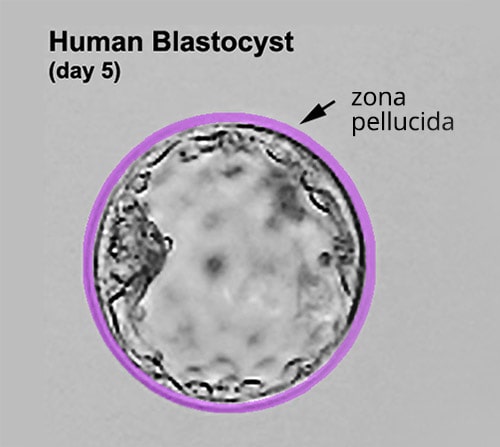
In some patients, it is thought that infertility may be due to defects in zona pellucida (hardening or thickening), which makes it difficult for the embryo to hatch and implant.
Indication of Assisted Hatching

Patients with previously failed IVF/ ICSI cycles
Patients who have the Frozen Embryo Transfer (FET).

Women older than 37 years of age

Patients with Day 3 embryos having a thick Zona

Women with a high Follicle Stimulating Hormone (FSH) level

Women with low AMH

Patients who are poor responders.

Patients, who in an earlier IVF cycle had a low fertilization rate, resulting in three or fewer embryos.
Types of Assisted Hatching
Nowadays mechanical and chemical hatching are outdated and no longer done.
At IHR, we do Laser Assisted Hatching (LAH).
Laser Assisted Hatching (LAH)
It is the most modern approach. It utilizes a machine with specialized software that aids in positioning, intensity, and focus of the lasers. In this method, the thickness of the zona is measured, allowing our embryologists to minimize the heat delivered to the adjacent inner cell mass.
Our lab at IHR has all the necessary equipment (see our Infrastructure) and skilled Embryologists (see Why choose IHR?) for LAH procedure.
At present we are also doing another procedure called LAZT.
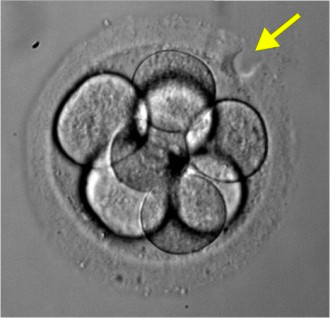
Laser Assisted Zona Thinning (LAZT)
Thinning a portion of the outer embryo shell (instead of breaching) by a laser for facilitating embryo’s hatching process i.e it does not involve the complete opening of the protective layer and internal environment of the embryo remains intact.
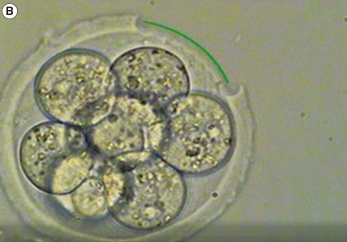
Frozen Embryo Transfer (FET) & LAZT
At IHR, since 2012 we cryopreserve most of our embryos and prefer to transfer in further cycles. This gives us better success rates (see our success rate page).
Once the embryo reaches the 8 cell on Day 3 or blastocyst stage on Day 5, these are preserved in liquid nitrogen at -196oC, by a process called Vitrification.
When an embryo is cryopreserved or vitrified, it is thought the outer shell may change as a result of the freezing process. If it becomes brittle or hardened and is without progressive thinning, a normal embryo may not be able to hatch and permit implantation.
A prospective randomized study published in Reprod Biomed Online (Apr 2008 16(4):589-96) evaluated the impact of assisted hatching on fresh and frozen-thawed embryos.
A total of 760 fresh embryo transfer cycles and 200 frozen-thawed embryo transfer cycles were randomly assigned to either receive or not receive assisted hatching. In fresh embryo cycles, there was not a significant difference with assisted hatching. However, in the frozen embryo groups, clinical pregnancy and implantation rates were significantly greater in the assisted hatching group.
At IHR we offer LAZT to all our FET patients as a routine procedure.